Back to projects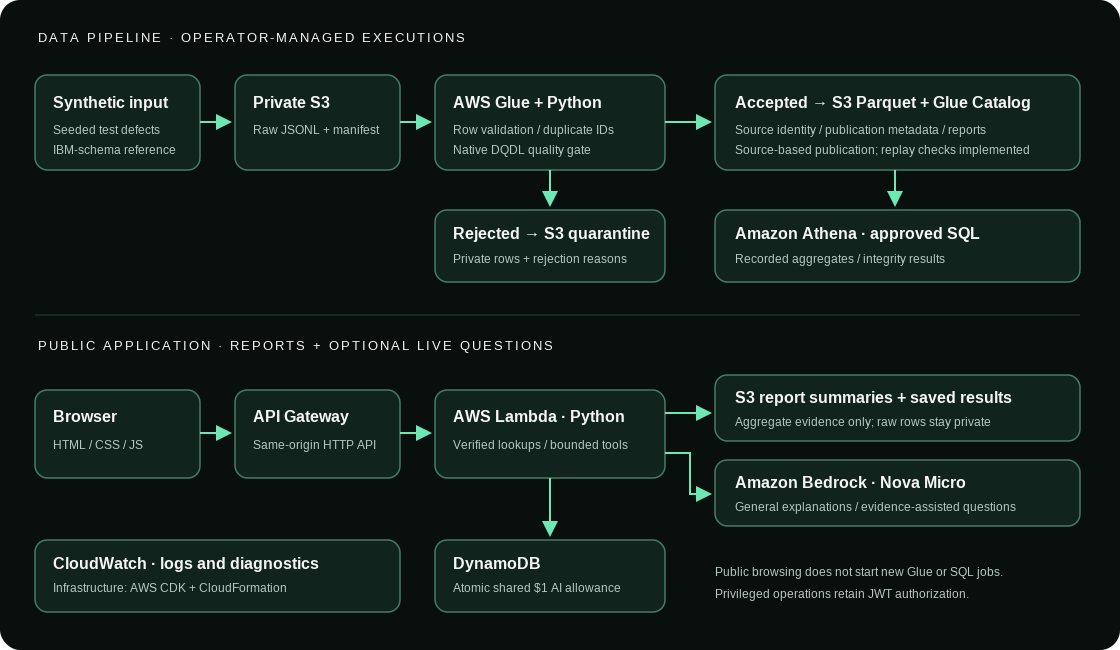
Data engineering · AWS · Generative AI
DataTrust AI
Financial data quality & evidence-grounded analytics.
What it solves
- Missing fields, invalid amounts, duplicate identifiers, and inconsistent formats can undermine financial analytics.
- Checks transaction data before publishing it for analysis.
What I built
- Python validation and private quarantine for rejected records.
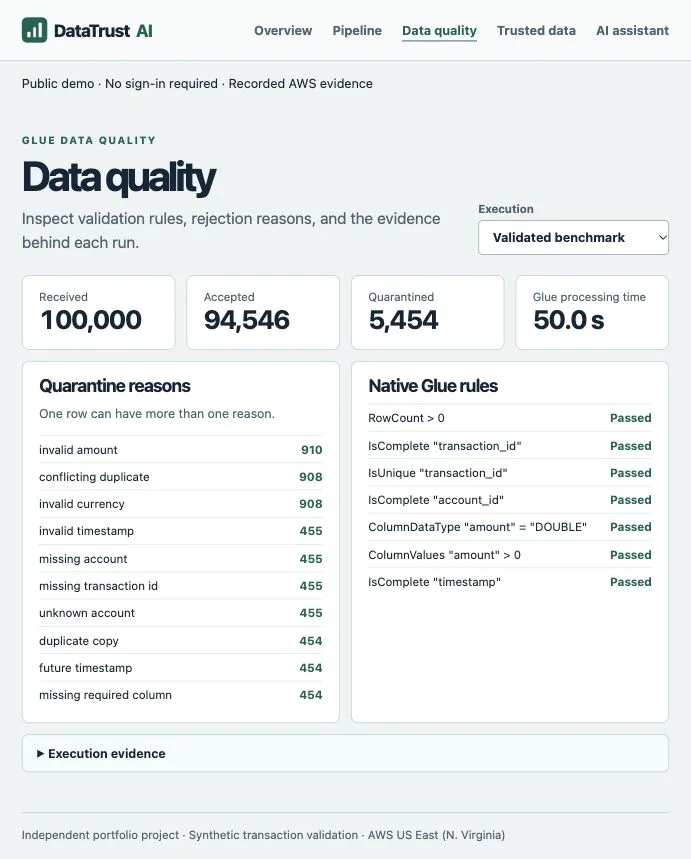
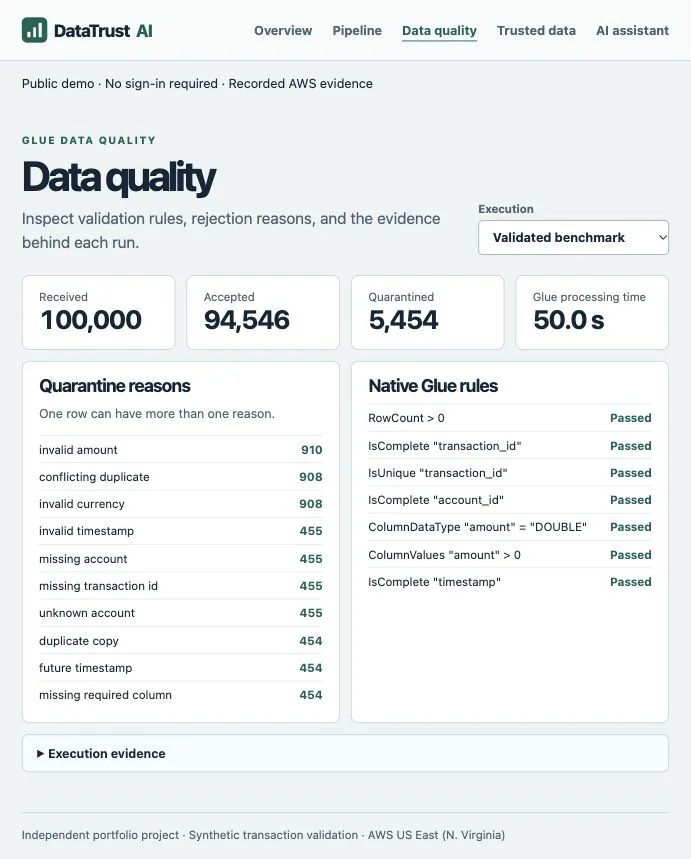
- Seven native Glue Data Quality rules on accepted data.
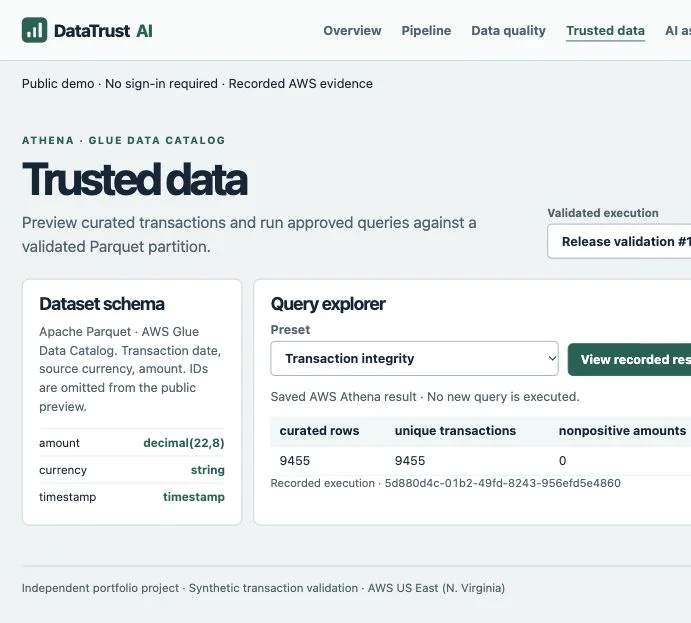
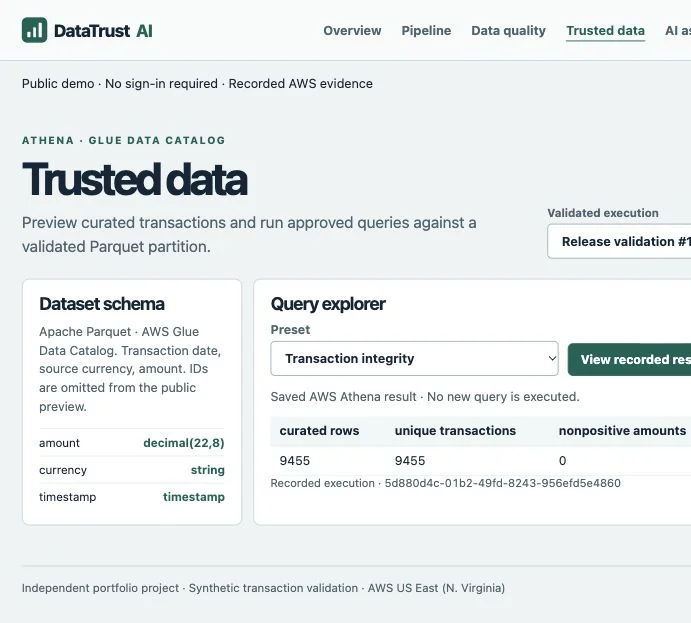
- Curated Parquet datasets with Glue Catalog and Athena analytics.
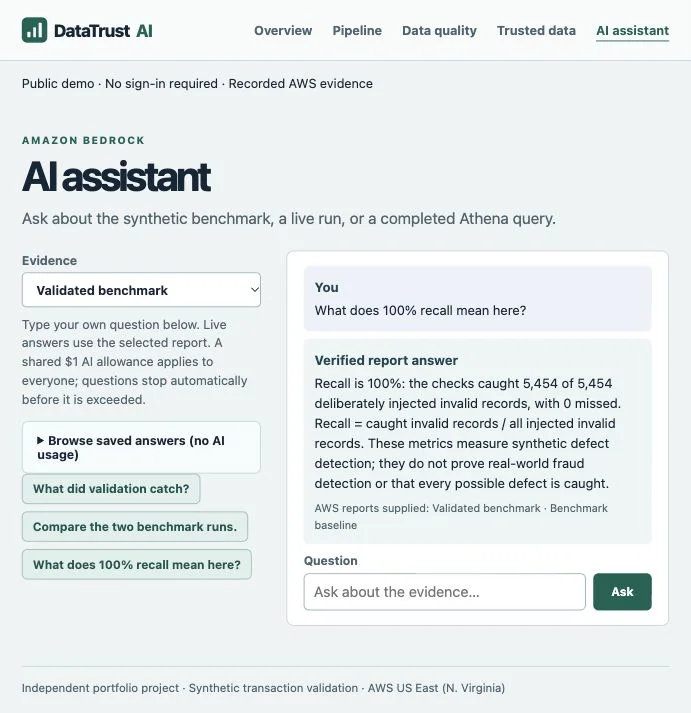
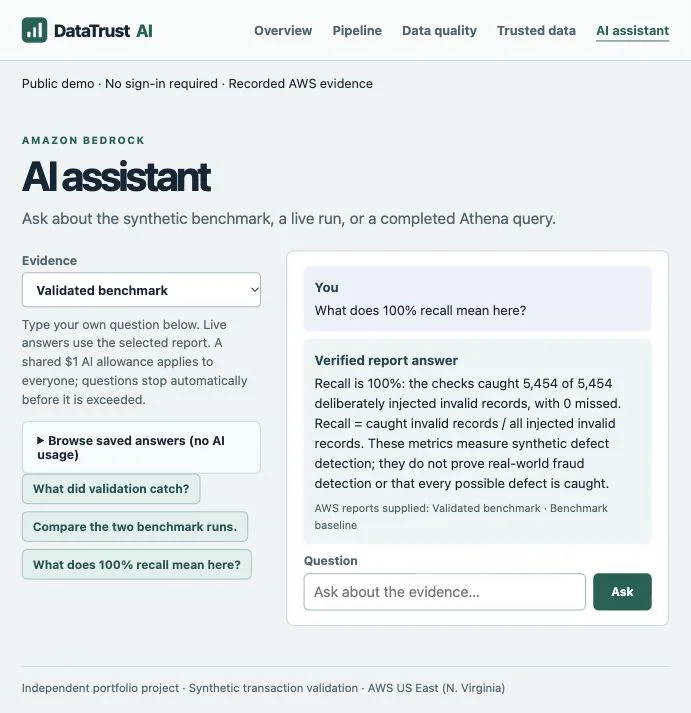
- Public aggregate reports and an evidence-grounded Bedrock assistant.
Benchmark results
- 100,000 synthetic records processed.
- 94,546 accepted · 5,454 quarantined.
- 7 / 7 native quality rules passed.
- Athena verified 94,546 rows and distinct transaction IDs.
- Injected invalid records published: 5,454 without validation; 0 with validation, on this synthetic benchmark.
Technologies & data
- Languages: Python, SQL, JavaScript.
- AWS: S3, Glue, Athena, Lambda, API Gateway, Bedrock, DynamoDB, CloudWatch.
- Interfaces: public HTML/JavaScript showcase; separate React/TypeScript operator dashboard.
- Data: project-generated synthetic transactions based on the IBM AML schema.
How it works & architecture
- Prepare synthetic transaction files in private S3 storage.
- Run Glue validation; quarantine rejected rows.
- Evaluate accepted records with native quality rules.
- Publish Parquet and catalog it for Athena.
- Serve reports through API Gateway and Lambda; use bounded Bedrock calls for explanations.
Application screenshots & demo walkthrough
- Open Pipeline and select the completed release run.
- Inspect Data quality and its acceptance/quarantine counts.
- Open Trusted data to inspect saved Athena results.
- Ask the assistant about processed transactions or benchmark comparisons.
Engineering decisions & evidence
- Separate record validation, native quality checks, and analytical evidence.
- Read exact report metrics directly; use the model for generated explanations.
- Keep raw records private; reserve a bounded shared allowance for live AI calls.
- The separate 10,000-row release demonstration accepted 9,455 and quarantined 545 records.
- Benchmark measurements apply to synthetic demonstration data. Detailed test scope and operational limitations are documented in the technical notes.